Biogeochemical research at Cape Bounty examines processes occurring across both terrestrial and fluvial systems, and also in terrestrial and aquatic ecosystems. The overarching goal of the biogeochemical research at our site is to better understand, quantify and scale up how changing climate, hydrology and permafrost conditions alter the composition and fluxes of organic matter, nutrients, and contaminants transferred between the atmosphere, the watershed, and rivers, ponds, and lakes downstream.
On the fluvial side of the matter, we have investigated how varying scales and types of permafrost disturbance (including active layer thickness, thermokarst, active layer detachment slides, and retrogressive thaw slumps) affect the amounts and types of nitrogen, organic matter, and mercury, from soils to rivers, in effort to improve our understanding how changing permafrost conditions might feed back on climate. One key potential feedback is that thawing permafrost may release increasing amount of reactive (biologically available) nitrogen, and fresh easily decomposed (or labile) organic matter, which could enhance decomposition of soil carbon and enhance aquatic biological productivity and respiration, thus enhancing rates of CO2 flux to the atmosphere.

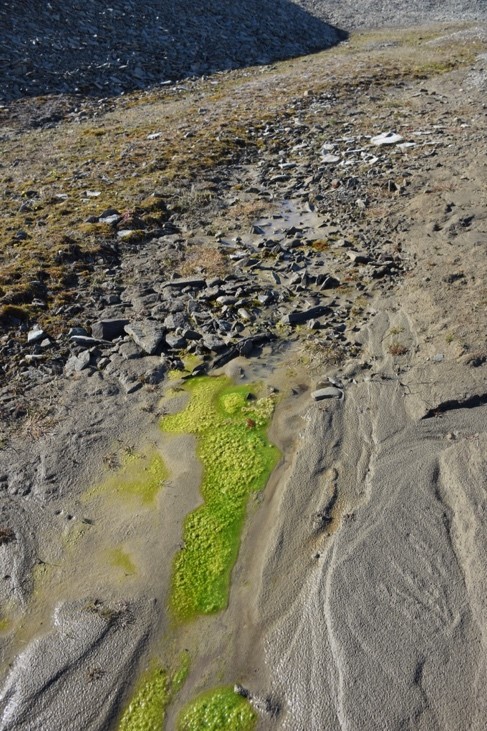
Our teams also examine the terrestrial ecosystem carbon and nutrient fluxes through various means…. (more coming soon)
A new initiative at our site is a project examining mercury (Hg) dynamics. The project will investigate how climate-driven changes to hydrology, permafrost, and landscape stability impact Hg mobilization, movement and bioavailability within paired watersheds that are being affected by climate change to differing extents. We will use interdisciplinary approaches to identify Hg sources, Hg accumulation, and Hg pathways through terrestrial and freshwater ecosystems. We will assess Hg transformations, Hg uptake and transfer into aquatic and terrestrial food webs, and the health of the fish. The CBAWO provides a novel opportunity to study the effects of climate change on watershed and lake Hg dynamics in the High Arctic. Our work will leverage long-term datasets and knowledge of the unique paired watersheds that represent a natural experiment given the divergent impacts in the two study systems.
 Cape Bounty Arctic Watershed Observatory